The Quiet Power of Photography: How Slowing Down Supports Mental Health
Where It All Quietly Began
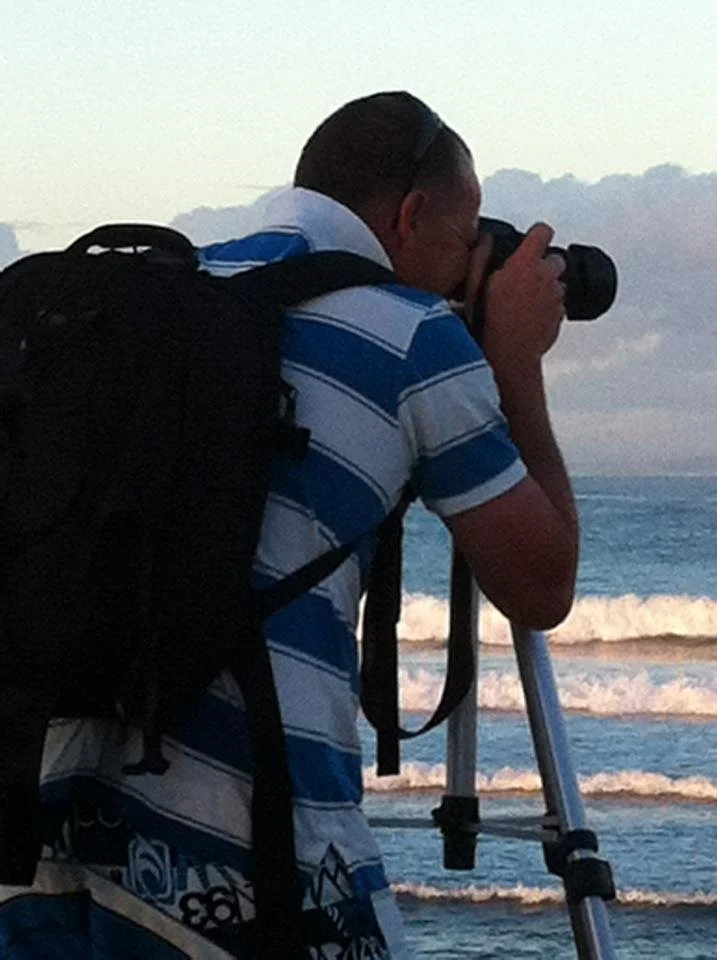
Almost 15 years ago, I stood on the headland at Crescent Head, waiting for sunrise.
Camera on a tripod.
Hawaiian shirt on (some habits never change 🌺).
It was my first serious landscape shoot. I had no real plan, no clear direction — and absolutely no idea where this new journey might take me. If I’m being completely honest, the resulting photos really weren’t worth talking about. They weren’t award-winning, they weren’t technically brilliant, and they certainly weren’t portfolio material.
But that didn’t matter.
What mattered was the process.
(No Hawaiian shirt for this sneaky stalker photo snapped at Crescent Head!)
That morning came at the end of a very busy, demanding period in my life. I was running hard, juggling responsibilities, and like many of us do, pushing through without really stopping to check in. Standing there in the half-light, watching the horizon slowly glow, something shifted. I slowed down. I breathed. I was present.
Little did I know at the time, that quiet sunrise — and the simple act of being there with a camera — was exactly the change I needed.
Photography and Mental Health: More Connected Than We Realise
We talk a lot about mental health these days — and rightly so. Life moves fast. Expectations are high. Screens are constant. The pressure to keep up can quietly chip away at our wellbeing if we’re not careful.
Photography offers something increasingly rare: permission to slow down.
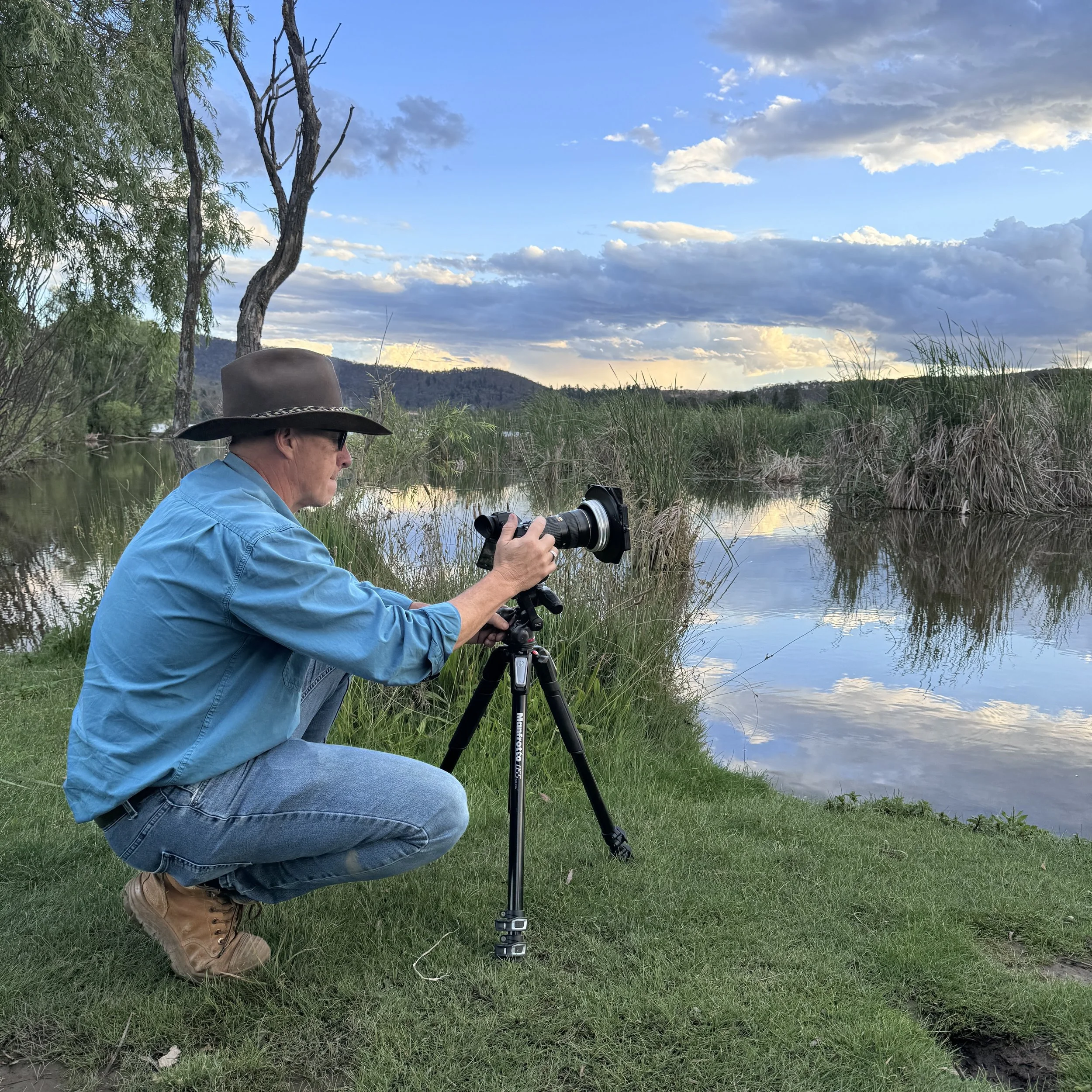
According to the Mayo Clinic, engaging in creative activities can help reduce stress, improve mood, and support emotional wellbeing. Creative expression encourages focus, helps regulate emotions, and provides a healthy outlet for processing life’s experiences.
Photography does this gently and without judgement.
It doesn’t rush you.
It doesn’t demand perfection.
And it meets you exactly where you are.
When I’m behind the camera, my attention narrows. The mental noise fades. I’m no longer replaying conversations or worrying about tomorrow — I’m watching light move across water, clouds drift, shadows stretch. That shift into the present moment is powerful.
“The photos weren’t the point — slowing down was. Photography gave me space to breathe when I didn’t realise I was holding my breath.”
Slowing Down Is Not Lazy — It’s Necessary
Photography forces you to slow down, whether you intend to or not.
You wait for light.
You observe before you act.
You stand still and let the scene unfold.
This slowing of pace mirrors many mindfulness practices, and the Mayo Clinic consistently highlights mindfulness as a proven way to support mental wellbeing by reducing anxiety and improving emotional regulation.
Sometimes that slowing down is as simple as:
Wearing a loud Hawaiian shirt and allowing yourself to be unapologetically you
Heading out for a bushwalk with a camera in hand
Sitting with a scene longer than feels comfortable
Or yes… occasionally contemplating your navel 😄
These moments aren’t wasted time. They’re recalibration.
Photography as Mindfulness in Motion
Mindfulness doesn’t always look like silence and stillness. Sometimes it looks like standing on a beach at sunrise, feeling the cool air on your face, watching colour arrive slowly.
Photography naturally encourages:
Presence – your attention is anchored in the now
Observation – you notice details you’d otherwise rush past
Patience – you accept what the light gives you
Acceptance – not every shoot works out, and that’s okay
These are core skills associated with good mental health.
Photography also gives us a reason to step outside — to move our bodies, change environments, and reconnect with nature. The mental health benefits of time spent outdoors are well documented, particularly when paired with gentle creative focus rather than performance or pressure.
Taking in the scenery with other likeminded photographers on Shelly Beach, Central Coast. Slowing down to enjoy the moment.
When Photography Becomes a Safe Space
For many people — myself included — photography becomes a safe place to process life.
Some days it’s joyful: colour, movement, excitement.
Other days it’s quiet: soft light, still water, minimal frames.
“Your images don’t need to be shared.
They don’t need to be perfect.
They just need to serve you.”
This is something I explored further in my earlier blog, “What Areas of Learning Does Photography Offer — and How It Benefits Our Mental Health and Life”, where I reflected on how photography teaches resilience, mindfulness, patience, and emotional awareness over time. Photography doesn’t just teach us about light — it teaches us about ourselves.
Mental Health Support Beyond the Camera
While photography can be incredibly supportive, it’s important to say this clearly:
It’s okay to need help beyond the lens.
Creativity is a tool — not a replacement for professional support. If you’re struggling, reaching out to local mental health services, community organisations, or health professionals is a strong and positive step. Support exists, and you don’t have to navigate things alone.
Photography can walk alongside that support — offering calm, grounding, and perspective — but asking for help is always valid.
Looking Back to That Morning at Crescent Head
That sunrise at Crescent Head wasn’t dramatic.
No wild colour.
No epic storm.
Just quiet light… and time.
Nearly 15 years on, photography has taken me places I never imagined — personally and professionally. It’s shaped how I see the world, how I move through it, and how I take care of my mental health along the way.
That morning taught me something I still carry today:
Sometimes the most important journeys begin when you simply stop, slow down, and look.
Your Turn
If you’ve ever felt calmer behind the camera…
If photography has helped you breathe a little easier…
If slowing down has changed how you see the world…
I’d love to hear your story.
Leave a comment, share an image that helped you pause, or come and walk with me on a photowalk sometime. Photography isn’t just about images — it’s about wellbeing, connection, and giving ourselves permission to slow down. 📸✨